The observing of birds
What is birdwatching?
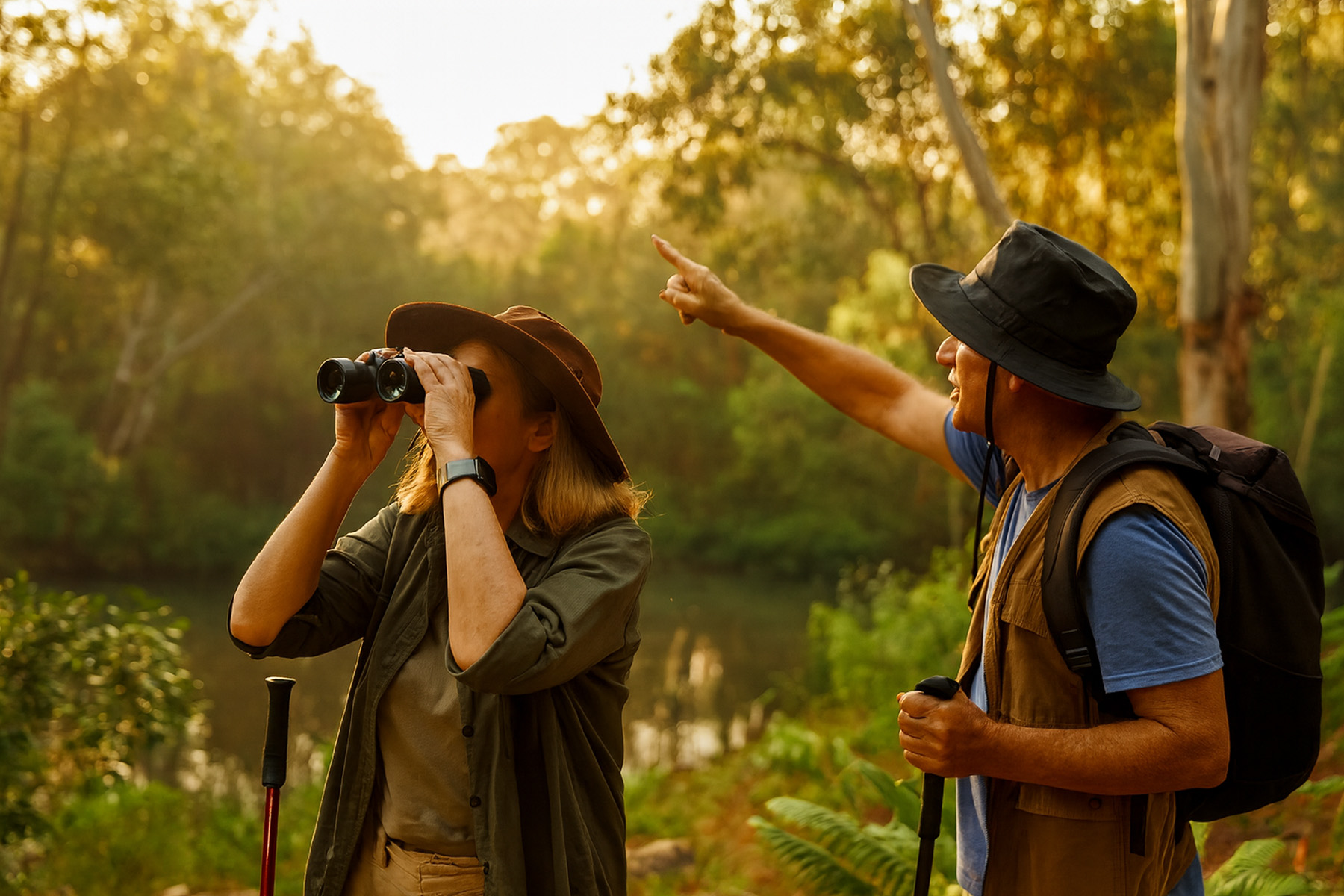
Birdwatching, or birding, is the observing of birds, either as a recreational activity or as a form of citizen science. A birdwatcher may observe by using their naked eye, by using a visual enhancement device such as binoculars or a telescope, by listening for bird sounds, watching public webcams, or by viewing smart bird feeder cameras.
Most birdwatchers pursue this activity for recreational or social reasons, unlike ornithologists, who engage in the study of birds using formal scientific methods. (Wikipedia)
Queensland has more than 600 species of birds—about 80% of all bird species found in Australia.
Birdwatching is easy in Queensland’s parks and forests, as unlike many other native animals, birds are often out and about during the day. Colourful birds are often easy to spot and you cannot help but notice noisy ones. Most young birds stay with their parents until they are fully grown, so there is much activity around birds’ nests. (Queensland Parks & Forests)
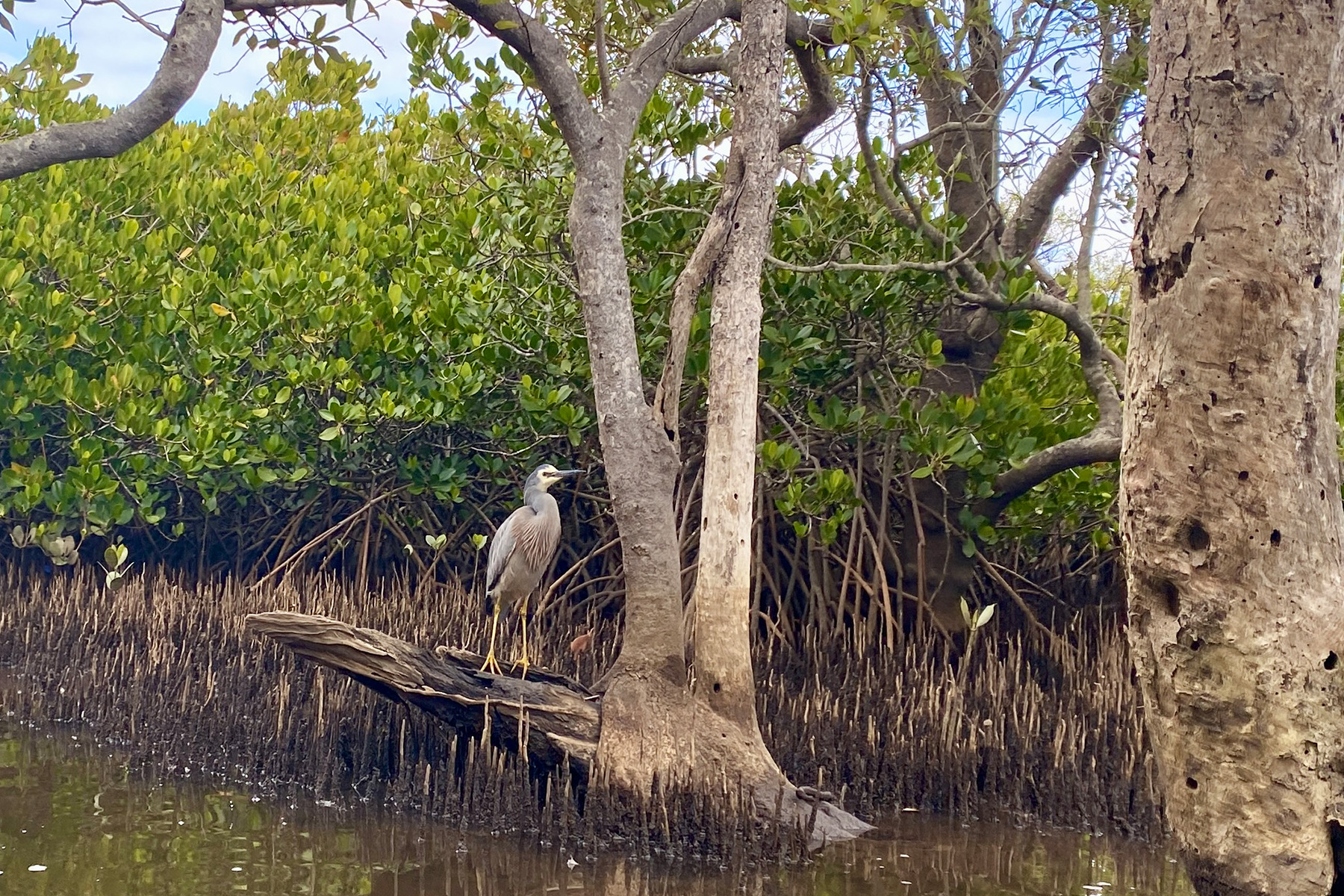
There is nothing quite like holding a pair of binoculars up to your eyes and ‘transporting’ a distant bird out of its own world and into your own personal space — revealing a kaleidoscope of colours, patterns, shapes and sizes.
In Queensland this experience is made all the richer with around 600 of Australia’s 800 species found here.
(Queensland Government)
Starting out
A range of excellent field guides and books on Australian birds are in print (and even older out-of-print versions can be found in the second-hand bookshops). Which one you choose will depend on what information you’re interested in. All will have good colour illustrations of birds while some will also have illustrations of nests and eggs and sections covering the life histories and behaviours of the different families of birds. Field guides will also give a phonetic description of a bird’s call and this is often useful as birds are more often heard than seen (CDs of bird calls can also be bought). Read More
Check out these books in the Outdoors Queensland Shop
Birdwatchers use a range of binoculars but generally go for ones with a 7–10 times magnification. The other consideration is the field of view (i.e. how wide an area is seen through the binoculars).
When you try out a pair of binoculars you will see that they have a pair of numbers written on them like 7×50 or 8×35. The first number refers to the magnification power of the binoculars and the second number indicates the size of the front lens. Generally speaking, the larger the second number, the wider the field of view (making it easier to find a bird through the binoculars) and the brighter the image will be (brightness is particularly important when light is poor due to the time of day, weather or when birdwatching in rainforest). Read More
You don’t have to go far to find birds. Even in treeless backyards there will be something to watch – and even the most common bird seen through binoculars can reveal something of itself that you’ve never noticed before.
But if you want to see a particular species, you may need to visit a national park or local conservation reserve. You can use this website to find out what national parks are near you and print out a species list of the birds and other wildlife recorded on that park. You can also access bird lists for parks or smaller areas using WetlandMaps.
Morning and afternoon are the best times to watch birds (the ‘dawn chorus’ is a particularly special time to see and hear birds). ‘Hot spots’ for birds include places like waterholes, and flowering or fruiting trees and are good places for sitting quietly and waiting for the birds to come to you. Read More
Birdwatching Links
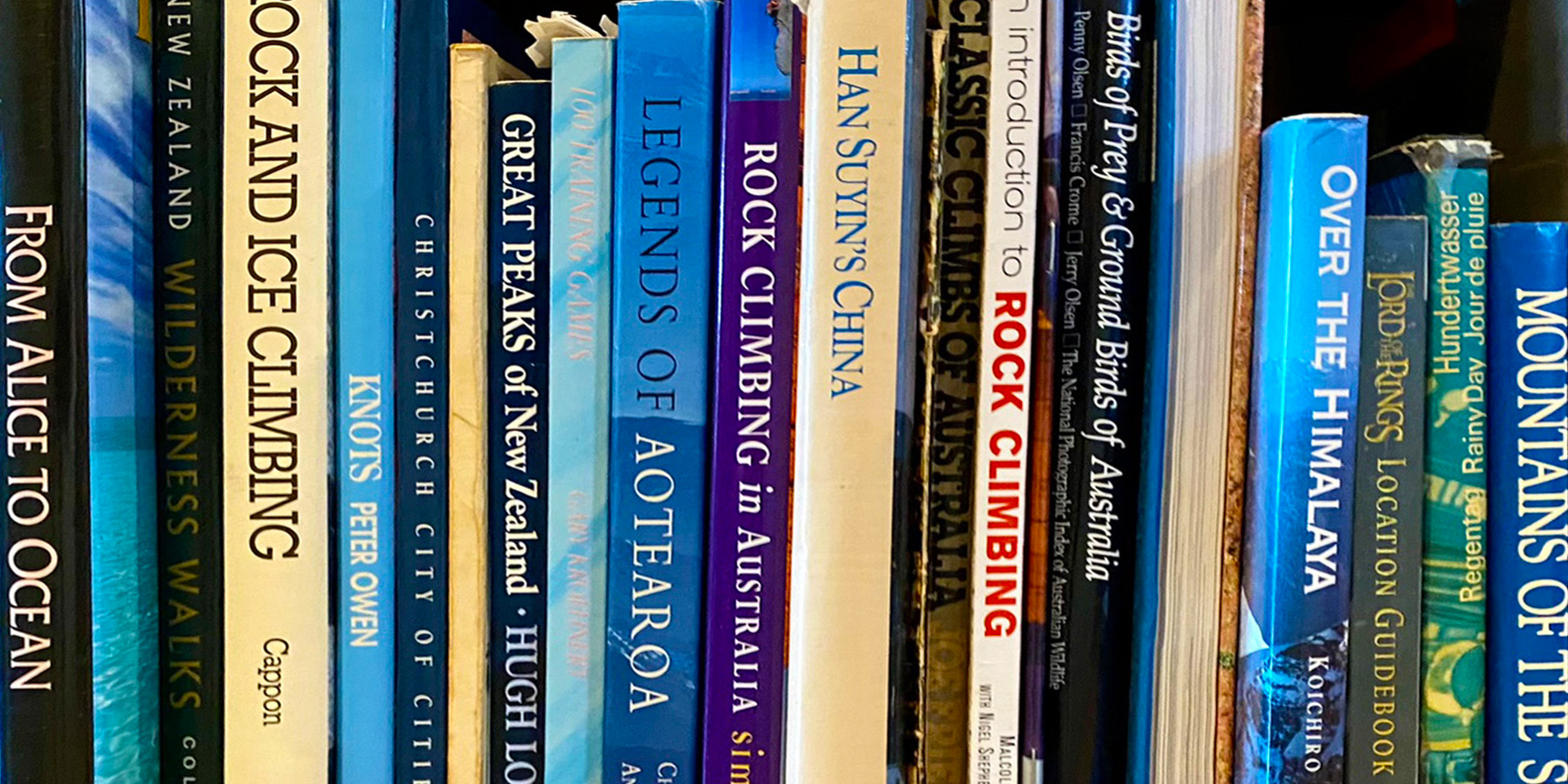
Find a book!
Search for birdwatching books and DVD’s in the Shop.
(search in Shop Categories)
Discover
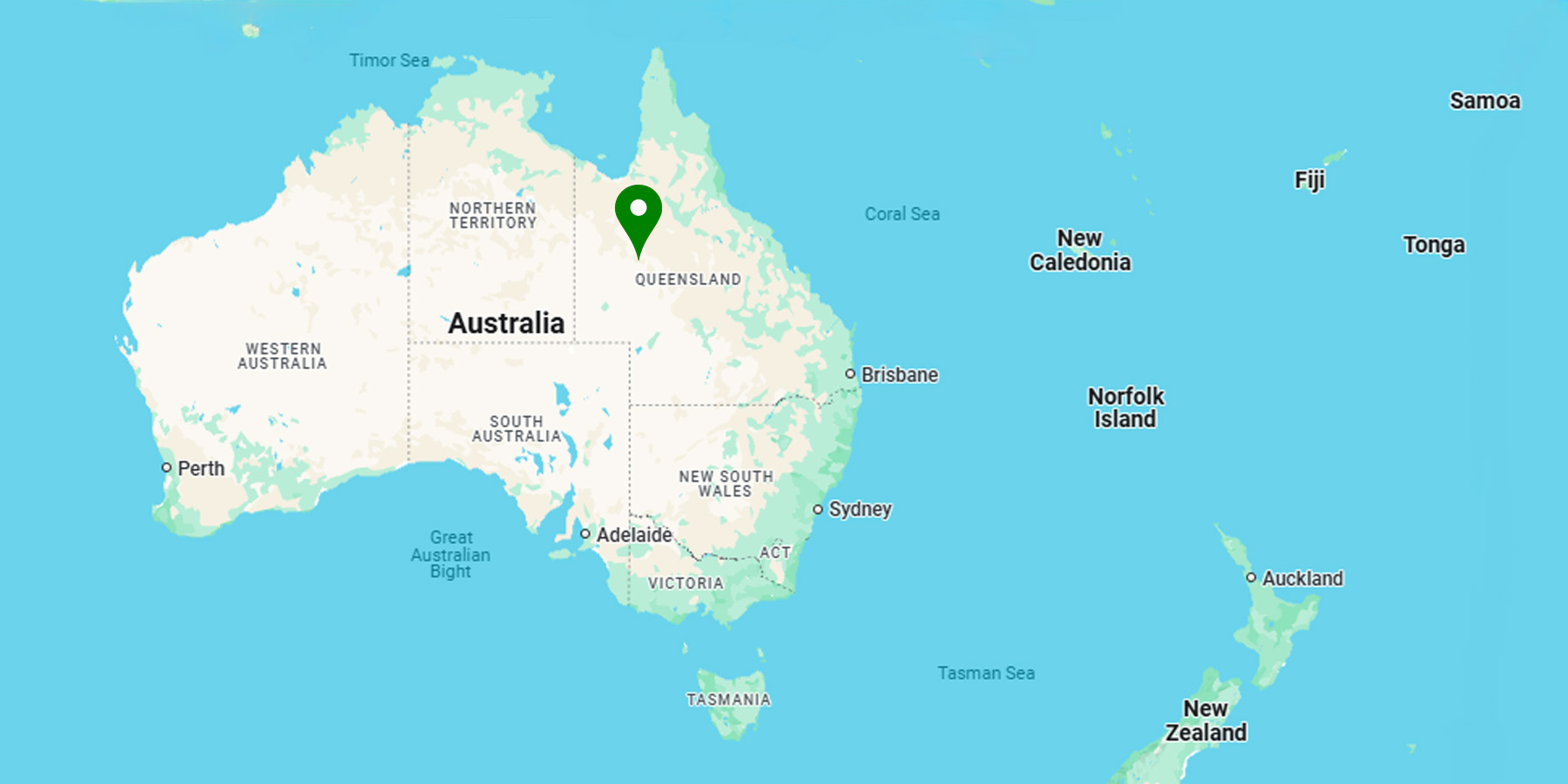
Search for birdwatching providers in Discover
(search on ‘birdwatching’ in Select Activity)
Recommend a Resource
Have an interesting or useful resource or link to share?
Let us know by Recommending a Resource